Every job below is one we do ourselves across Cambridge.
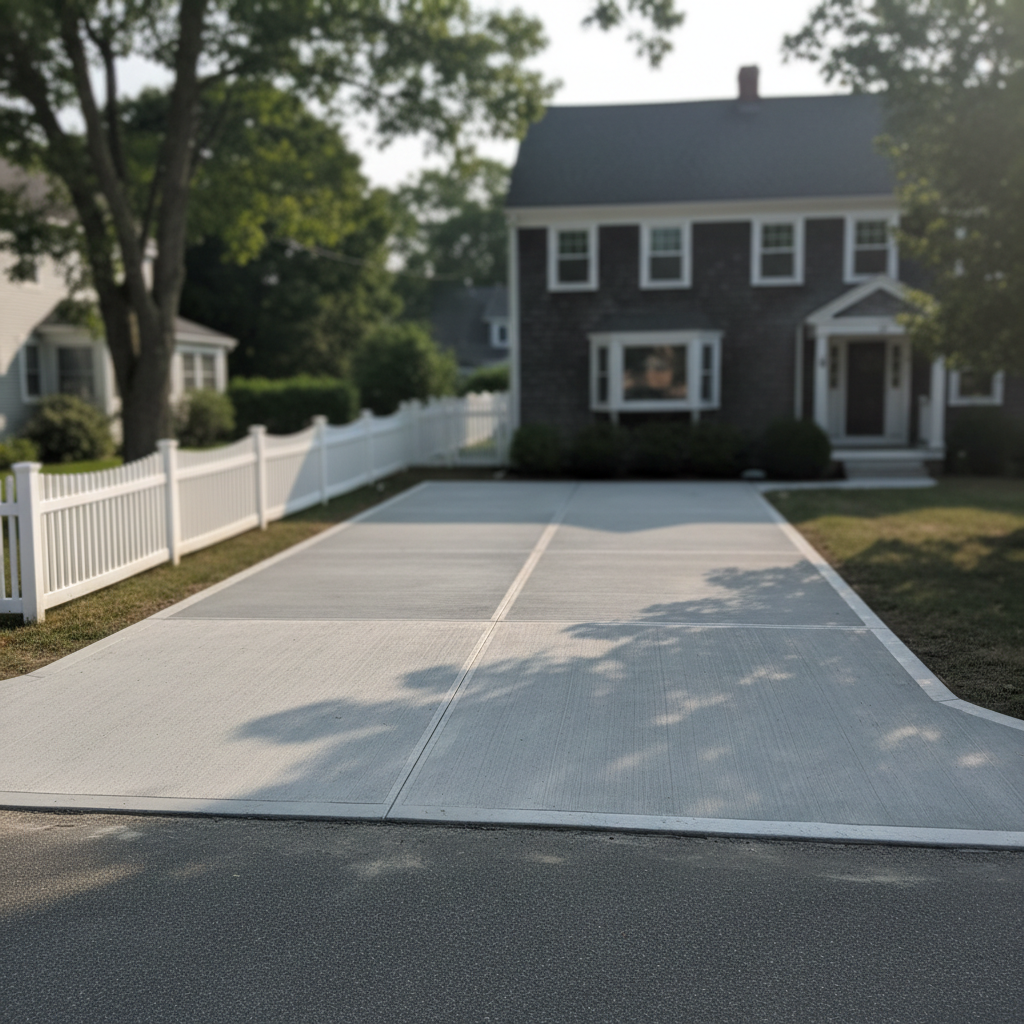
We form and pour driveways with a compacted gravel base underneath, usually four to six inches depending on the soil. Rebar goes into anything that'll carry a car, since wire mesh isn't enough once frost starts pushing on the slab every winter. We slope it away from the garage so water doesn't pool at the door.
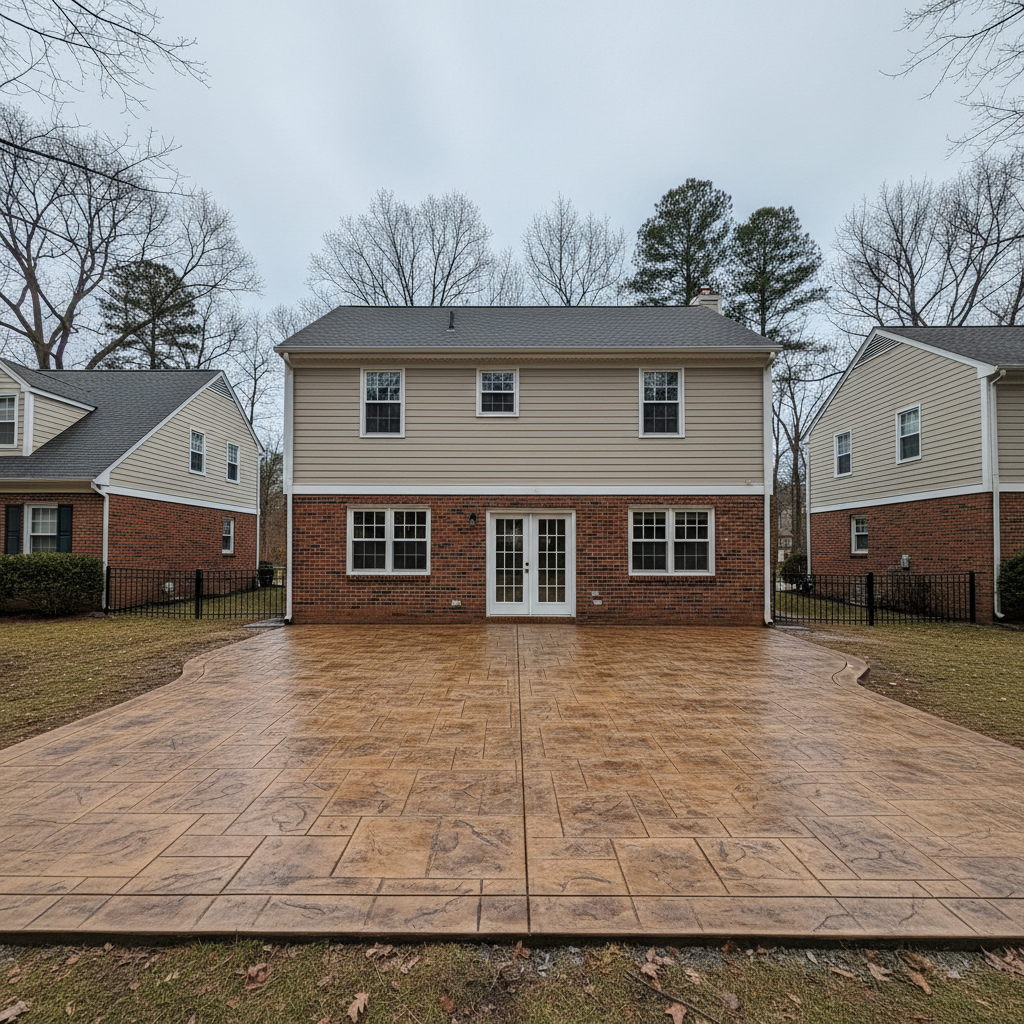
Patios get a broom finish or a stamped pattern, your call, but either way the base work is the same. We set control joints before the concrete sets, not after, so the cracks that happen eventually follow the joint instead of running through the middle of your seating area.
Stamped concrete can look like flagstone, slate or brick without the cost of actually laying stone. We color and texture it while the slab's still plastic, which is the only window you get, then seal it after it cures so the color doesn't wash out the first season. It needs resealing every two to three years to keep looking like it did on day one.
Front walks take a beating from shoveling, salt and foot traffic, so we finish them with a broom texture for grip in the winter. Cambridge has its own sidewalk specs if the walk runs along the street, and we build to those, not just to what looks good.
Steps have to hit code on rise and run or they're a trip hazard every time someone comes up them in the dark. We form and pour them with rebar through the treads, not just the stringers, since that's where cracking usually starts on a poured step.
Foundation cracks usually mean water's getting in or the footing's settling on one side. We figure out which one it is before touching anything, then patch, epoxy-inject or underpin depending on what's actually moving.
Hairline cracks in a driveway or garage floor are usually cosmetic, but a crack you can fit a nickel into is telling you the base underneath failed. We cut it out and repour with fresh rebar across the gap, or mudjack a sunken slab back to level if the concrete itself is still solid.
If a slab is structurally fine but the surface is spalled, pitted or just worn out from years of salt, it can be resurfaced with a bonded overlay instead of torn out. It costs a fraction of a full replacement, but it won't fix a slab that's actually cracked through or heaving.
Garage floors need a vapor barrier under the slab or moisture wicks up through the concrete for the life of the floor. We pitch the floor slightly toward the door so water from your tires or a hose has somewhere to go.
Retaining walls hold back a slope or keep a raised bed from sliding into the yard below it. We build them with drainage behind the wall, usually gravel and a perforated pipe, because a retaining wall that can't drain is a retaining wall that's going to lean or blow out eventually.
Four steps, and no surprises in any of them.
You tell us what you want doing, we look at what is actually there, and we ask the awkward questions early.
In writing, itemised, free. If something might add cost later we flag it now rather than at the end.
Same crew throughout. We cover your floors, keep the dust down and tidy up before we leave each day.
You point out anything you are not happy with and we fix it before the invoice, not after.
Concrete work is available on-site anywhere within about 50 miles of Cambridge.
What to expect once a concrete project actually gets underway.
Describe the problem and we will tell you what it probably is. No obligation.