
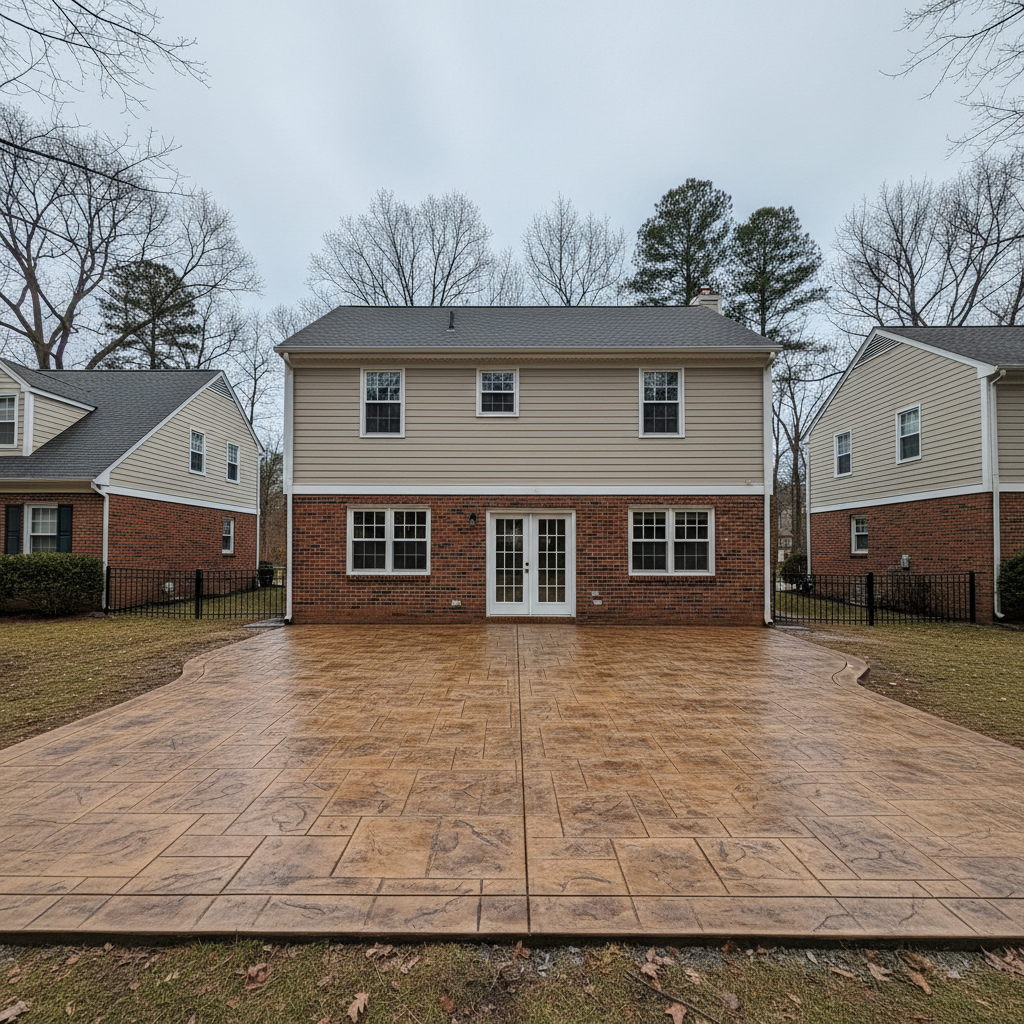
Cambridge has a strange mix of ground under it. Walk three blocks in Cambridgeport and you can go from old filled marsh to glacial till without noticing the difference on the surface. That matters more than most homeowners realize when they're pricing out a new driveway, a patio, or steps off the back of a triple-decker. Two contractors can quote the same slab and mean two completely different jobs, and the gap usually isn't visible until the first hard winter.
This isn't a sales pitch for one type of concrete work. It's what to actually look at, whether you're pouring a new walkway in North Cambridge or fixing a foundation crack on a hundred-year-old house near Harvard Square.
What the ground here actually does
A lot of Cambridge sits on fill. East Cambridge and parts of Cambridgeport were tidal marsh before they were filled in during the 1800s. Closer to the river you get silty, compressible soil that settles unevenly over decades. Up toward Avon Hill and North Cambridge you're more likely in glacial till, which is firmer but still has clay pockets that swell when wet and shrink when dry. Either way, a slab poured without the right base prep will crack or heave within a few years, and it won't crack along a clean line, it'll crack wherever the soil underneath decided to move first.
Massachusetts frost depth is generally figured at 48 inches for footings, and Cambridge inspectors hold to that. A patio slab doesn't need footings that deep, but anything load-bearing, like a foundation repair or a retaining wall over about 3 feet, does. If a contractor is vague about footing depth or base compaction, that's worth pushing on before you sign anything.
Permits and the city's process
Cambridge's Inspectional Services Department handles building permits for anything structural, including foundation work and most retaining walls over 4 feet. A new driveway apron or curb cut that touches the public way also needs sign-off from the city's traffic and public works side, since you're altering the sidewalk and street edge. A licensed contractor pulls these themselves and knows the difference between what needs a permit and what's cosmetic resurfacing that doesn't.
If your house sits in one of Cambridge's local historic districts, Mid Cambridge and Avon Hill being the two most homeowners run into, a sidewalk or front walk visible from the street can trigger a review for materials and appearance. It's not usually a long process, but a contractor who's never dealt with it will be caught off guard, and you'll be the one waiting on the delay.
A quick gut check
Ask straight out: "Do you pull the permit, or do I?" A contractor who dodges this question, or who tells you permits aren't necessary for a driveway, is telling you something about how they operate.
What to ask about the actual concrete
Price alone tells you almost nothing. A driveway quote that's a third cheaper than everyone else is usually cheaper because of what's under the surface, not what's on top.
- Base depth. A residential driveway slab generally wants 4 to 6 inches of compacted gravel underneath before concrete goes down. Skipping this, or compacting it loosely, is the single most common reason driveways heave in a New England winter.
- Rebar or mesh. Wire mesh is cheaper and fine for a lot of patios. Driveways and anything carrying real weight should have rebar, typically on a grid, tied up off the base rather than just laid on the gravel and hoped into the right position once concrete hits it.
- Slab thickness. Four inches for a standard patio or walkway, closer to 5 or 6 for a driveway that will see a car in winter with ice and salt working against it.
- Control joints. These should be cut within 24 to 48 hours of the pour, before the slab decides on its own where to crack. A joint every 8 to 10 feet on a driveway is typical. If nobody mentions joint spacing, ask.
- Cure time. You should be able to walk on a new slab in a day or two but shouldn't drive on it for at least 7 days, and it won't reach full strength for 28. Anyone telling you it's fine to park a car on fresh concrete after 48 hours is rushing the job or doesn't know better.
Cambridge weather and timing
Concrete cures by a chemical reaction, not by drying out, and that reaction slows in cold weather. Pouring in Cambridge between late November and March usually means using an accelerator in the mix and covering the slab with insulated blankets, since temperatures under about 40°F will stall the cure and weaken the surface. A contractor who pours through the winter without adjusting the mix is setting you up for scaling and flaking by spring.
Summer brings its own problem: humidity and heat mean the surface can set faster than the concrete underneath, which leads to cracking if nobody's finishing it at the right pace or keeping it damp while it cures. July and August pours need more attention to curing, not less.
Grading matters too. A lot of Cambridge lots are flat or barely sloped, and storm drains on older streets weren't built for the volume a hard summer downpour throws at them now. Any new slab against your house, patio or driveway alike, should pitch away from the foundation at roughly 1/8 inch per foot. If water's been pooling against your foundation for years, that's often a grading problem from the original pour, not something new.
What to walk away from
A quote with no mention of base prep, rebar, or joint spacing. A contractor who wants full payment up front before any work starts. Anyone who tells you permits aren't needed for driveway or foundation work in Cambridge. No general liability insurance certificate, or hesitation when you ask for one. A timeline that has you driving on a driveway the next day.
None of this is complicated once you know what to ask. It's the same five or six questions whether you're pouring a garage floor, fixing a cracked front step, or putting in a retaining wall that holds back a sloped backyard in Somerville or Belmont. The contractors worth hiring answer them without blinking, because they've been asked before and they know the ground they're building on.
If you want a second opinion on a quote, or want someone to walk the lot before you commit to anything, Stronghold Concrete Works is a call away.